



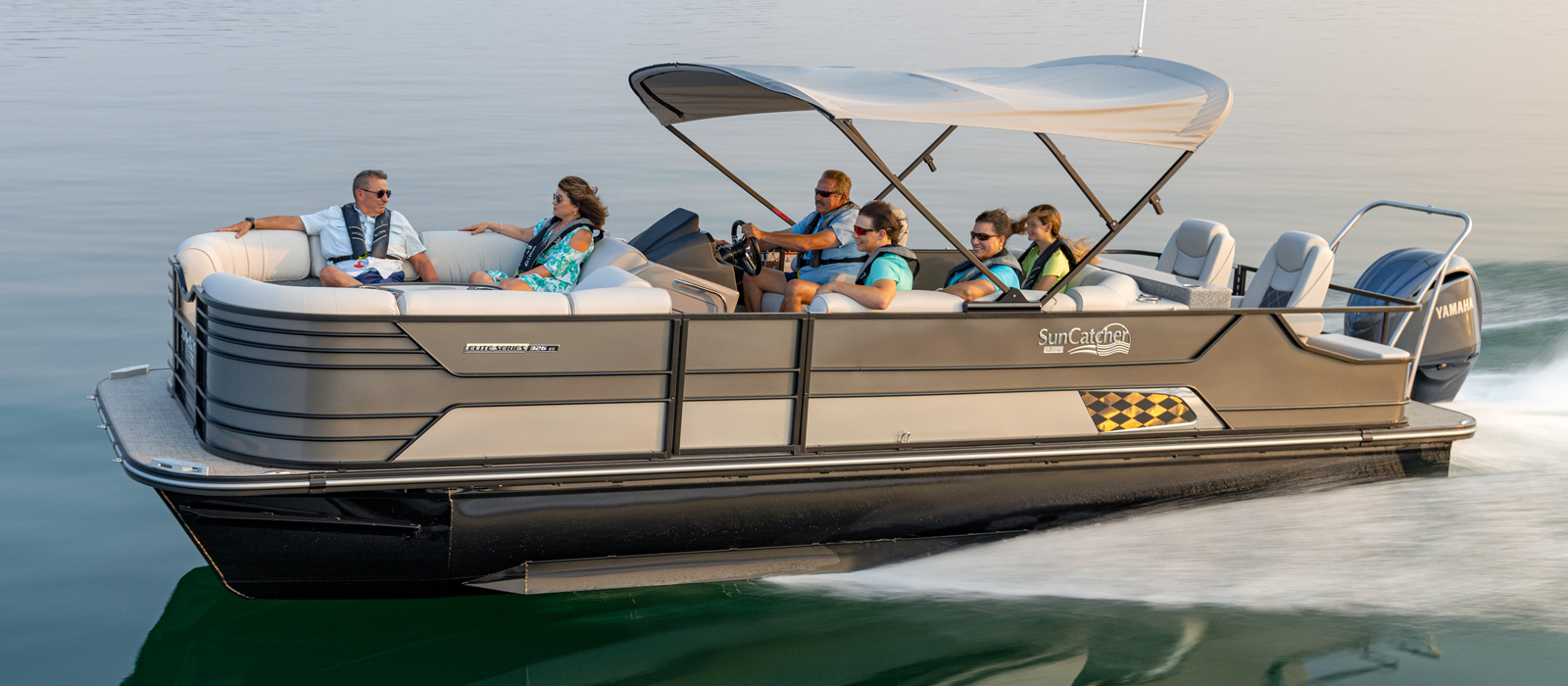
Choosing the right pontoon boat size is one of the most critical decisions you will make during your buying journey. Pick a boat that is too small, and your family will feel cramped and cluttered with gear. Choose one that is too large, and you may face trailering headaches, tight dock maneuvering, and unnecessary fuel costs.
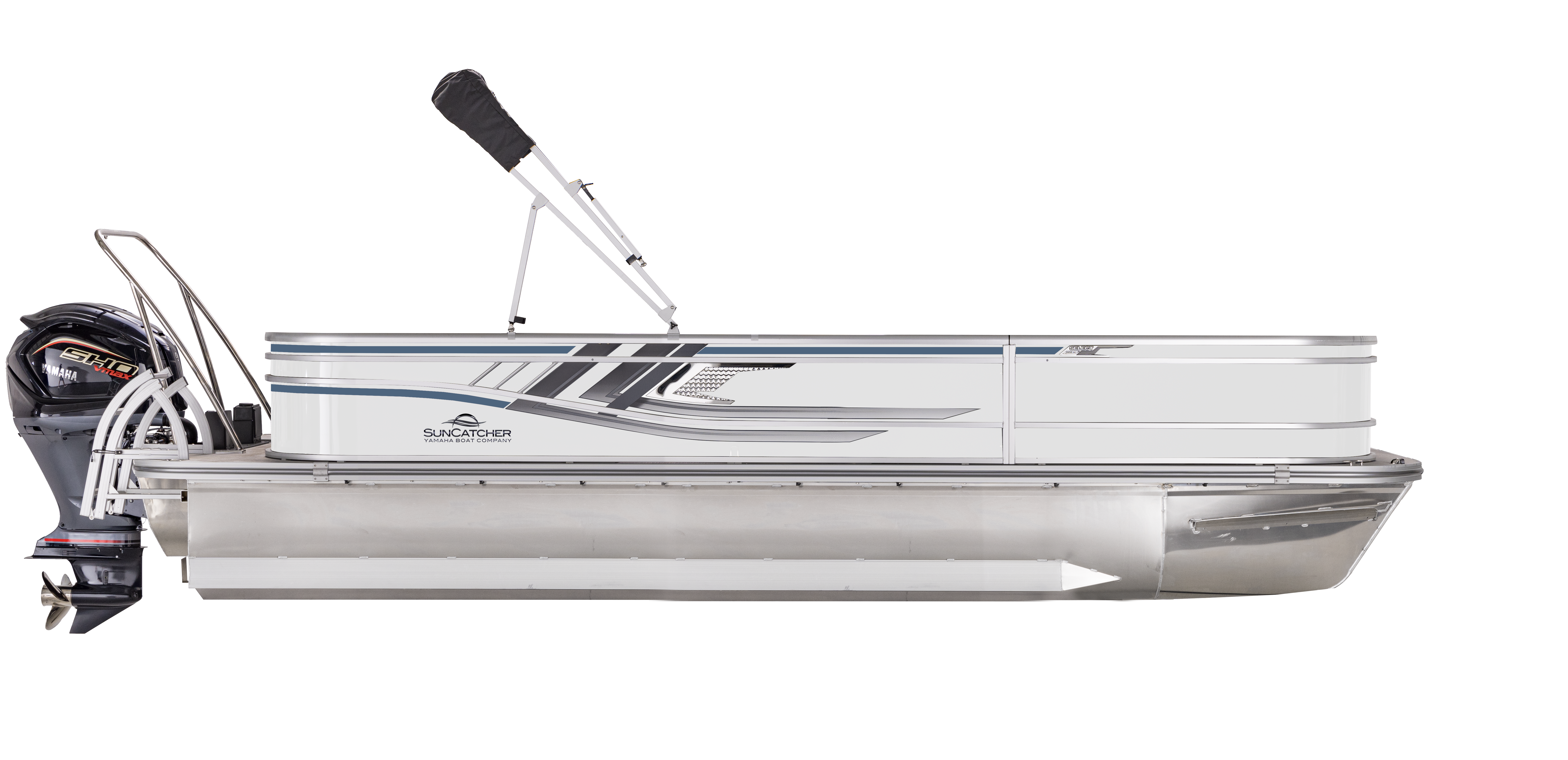
Pontoon boats typically range from 16 to 27+ feet in length. To help you find the sweet spot for your lifestyle, let’s break down the primary factors that dictate boat size, including passenger capacity, lake size, towing logistics, and storage, followed by a breakdown of each length class.
The 5 Key Factors That Dictate Pontoon Boat Size
Before looking at specific models, evaluate how you plan to use your boat by considering these five essential criteria:
1. Passenger Count & On-Board Space
While pontoon specs list a maximum weight and passenger rating, those numbers reflect absolute safety limits ,not everyday comfort. As a rule of thumb, subtract two people from the manufacturer’s maximum rating to determine your ideal “comfortable crew size.” If you regularly entertain 8 to 10 guests, you will want a deck length of at least 22 feet to avoid tripping over feet and coolers.
2. Body of Water & Lake Size
The size of your local waterway directly impacts how your hull handles wave chop and wind:
- Small Lakes & Quiet Rivers (Under 1,000 Acres): 16-to-20-foot twin-tube pontoons excel here. They are easy to navigate in narrow channels and shallow coves.
- Large Lakes & Reservoirs (1,000+ Acres): Big water creates larger waves and cruiser wakes. A 22-to-27-foot boat ,especially a triple-tube “tritoon”, provides the displacement and buoyancy needed to ride over rough chop smoothly and safely.
3. Towing & Trailering Capabilities
If you store your boat on a trailer and haul it to different ramps every weekend, factor in your vehicle’s towing capacity:
- 16–20 Foot Models: Dry weight typically ranges from 1,500 to 2,500 lbs. These can be towed by many mid-size SUVs and light crossovers.
- 22–27 Foot Models (Tritoons): With larger engines and three aluminum logs, total towing weight (boat + motor + trailer + fuel) often exceeds 4,500 to 6,500+ lbs, requiring a full-size half-ton or three-quarter-ton truck.
4. Slip Size & Dock Space
Before placing a deposit, measure your boat slip, lift capacity, and dock footprint. Remember to add 2 to 3 feet to the advertised deck length to account for the outboard motor in the trimmed-up position and bow light extensions.
5. Gear & Storage Needs
Watersports gear, water toys, heavy coolers, fishing tackle, and safety equipment quickly eat up floor space. Larger 24-to-27-foot models offer expansive under-seat storage compartments, center-tube ski lockers, and built-in changing enclosures that keep your main deck clutter-free.
Pontoon Boat Length Guide: Breakdown by Size
──────────────────────────────┐
│ Length Class │ Avg. Crew Size │ Primary Boating Style │
──────────────────────────────┤
│ 16 – 19 Feet │ 4 – 6 Passengers │ Small lakes, rivers, fishing │
│ 20 – 22 Feet │ 6 – 9 Passengers │ Family cruising, light tubing │
│ 23 – 25 Feet │ 8 – 12 Passengers │ Watersports, tritoon, parties │
│ 26 – 27+ Feet │ 12+ Passengers │ Big-water luxury, big crowds │
└──────────────────────────────┘
Compact Pontoons (16 – 18 Feet): Compact & Nimble
- Best For: Couples, small families, electric-only lakes, and casual anglers.
- Pros: Exceptionally easy to trailer, store in a standard residential garage, and launch single-handedly. Highly fuel-efficient with smaller 40 to 90 HP outboard motors.
- Cons: Limited floor space and reduced stability in heavy boat traffic or rough water.
Mid-Size Pontoons (20 – 22 Feet): The All-Around Sweet Spot
- Best For: Average-sized families wanting a balanced mix of cruising, swimming at the sandbar, and casual watersports.
- Pros: Generous seating configurations (such as dual bow couches and stern loungers) without feeling overly bulky. Operates great with 115 to 150 HP outboards.
- Cons: Can get crowded quickly if you regularly host more than 8 adults.
Full-Size Pontoons & Tritoons (23 – 25 Feet): The Watersports & Host Favorite
- Best For: Large families, active watersports enthusiasts, and big-water boating.
- Pros: This is where tritoon performance hulls truly shine. Able to handle 200 to 300+ HP engines, these models effortlessly pull skiers and wakeboarders while offering expansive, luxurious deck plans.
- Cons: Requires a larger tow vehicle, tandem-axle trailer, and higher overall investment.
Luxury Flagship Pontoons (26 – 27+ Feet): Maximum Space & Big-Water Power
- Best For: Yacht-style entertaining, massive gatherings, and handling rough open water on large lakes or coastal bays.
- Pros: Unmatched plush lounge seating, dual captain’s chairs, entertainment bars, and smooth, dry rides through heavy chop.
- Cons: Requires dedicated slip or marina storage; difficult to haul on narrow roads or fit into tight boat ramps.
Final Verdict: Finding Your Ideal Match
To pick the right length, focus on your 80% use-case scenario, how you will realistically use the boat 80% of the time, rather than planning around a single holiday weekend.
If you primarily cruise small, calm lakes with 4 or 5 people, a 18-to-20-foot model will save you money and storage hassle. But if you want to pull watersports on a busy reservoir with 10 friends on board, stepping up to a 23-to-25-foot tritoon is an investment you will appreciate every time you turn the key.