




When shopping for a SunCatcher Pontoon Boat, you will inevitably hit a critical decision point in your buying journey: Should you buy a traditional twin-tube pontoon, or step up to a triple-tube “tritoon”?
While they look remarkably similar sitting at the dock, the structural difference between two logs and three logs completely transforms your experience on the water. It impacts how the boat handles rough chop, how much Yamaha outboard power you can spec, and where you can safely take your family.
To help you make the best choice for your lifestyle and budget, let’s break down the engineering differences, performance specs, and practical pros and cons of both pontoon hull configurations.
The Anatomy: Two Logs vs. Three
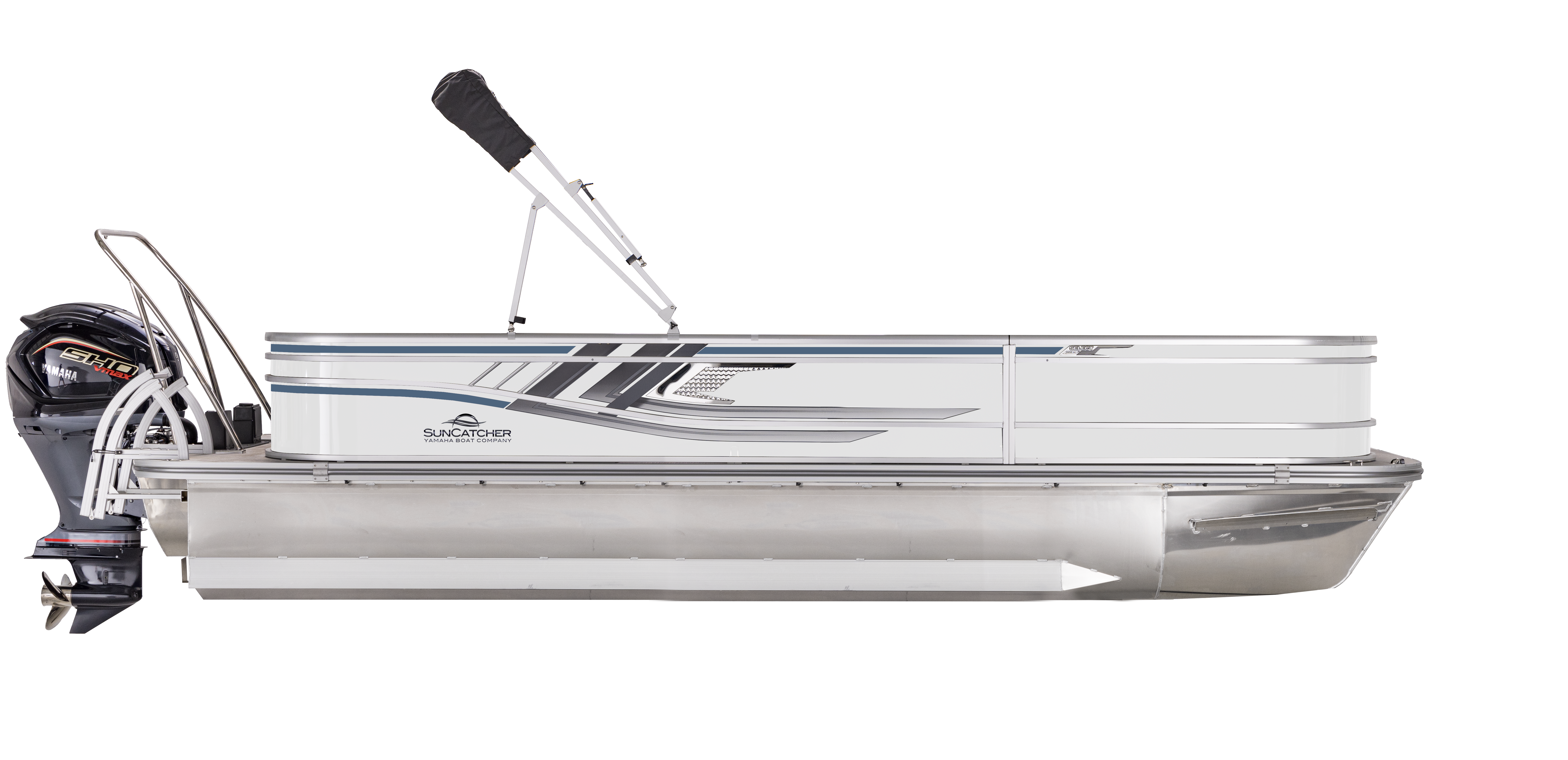
At a glance, both options feature spacious deck space and plush bow lounges. However, the magic happens beneath the deck. Standard pontoons rely on two outer aluminum tubes, whereas a tritoon adds a central third log, often engineered with performance skins and lifting strakes to maximize speed and stability.
| Feature | Standard Pontoon (Twin-Tube) | Tritoon (Triple-Tube) |
| Number of Hulls | 2 Aluminum Logs | 3 Aluminum Logs |
| Average HP Range | 40 HP – 115 HP | 150 HP – 300+ HP |
| Rough Water Handling | Moderate (Best for calm coves) | Superior (Slices through heavy chop) |
| Turning Dynamics | Flat, slight outward lean | Aggressive inside lean (Like a V-hull) |
| Weight & Payload | Lighter, lower passenger capacity | Heavier, elevated weight & gear limits |
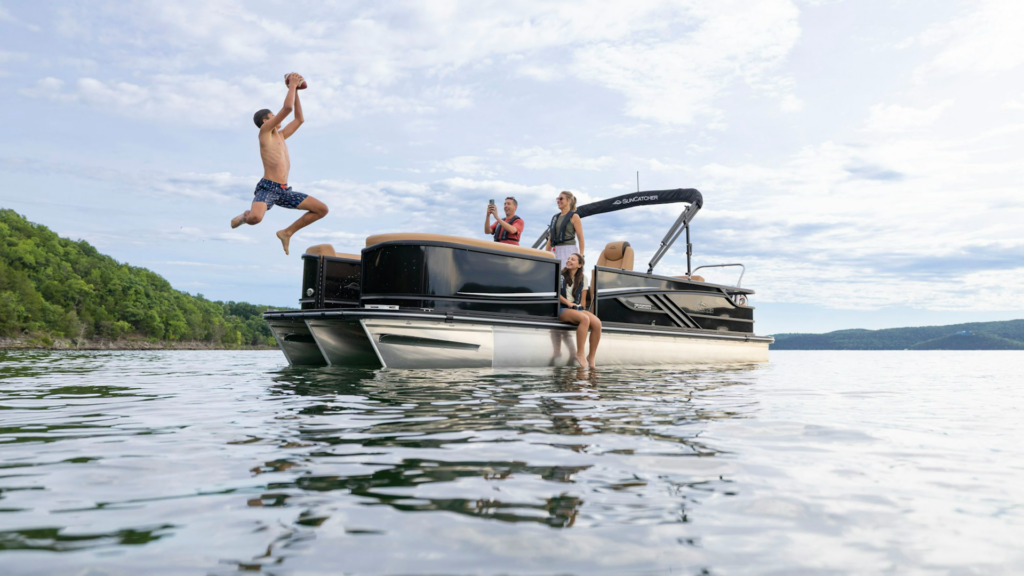
Traditional Pontoons: The Calm Water Cruiser
A classic twin-tube pontoon boat is the iconic design that launched modern lake life. Supported by two buoyant aluminum pontoons, these models focus on efficiency, maximum deck space, and effortless relaxation.
The Pros:
- Cost-Effective Entry: Twin-tube models have a lower initial purchase price and require smaller engines (like a Yamaha F70 or F115) to operate efficiently. This saves you money upfront, at the fuel dock, and on insurance.
- Shallow Draft Capability: Lighter overall displacement lets twin-tube pontoons glide effortlessly into shallow backwater coves, skinny rivers, and secluded fishing spots.
- Ideal for Small-to-Medium Lakes: If you boat on a quiet lake or speed-restricted waterway, a traditional pontoon gives you all the comfort, sound systems, and sun loungers you need without forcing you to pay for performance features you’ll never use.
The Cons:
- Chop Sensitivity: Because they lack center buoyancy, two-tube pontoon models tend to “plow” into rolling waves rather than slice over them, leading to a bumpier, wetter ride on windy days.
- Flat Turning Radius: When making sharp turns at higher speeds, twin-tube pontoons lean slightly outward, which can feel unfamiliar to boaters used to traditional fiberglass V-hulls.
Tritoons: The High-Performance Athlete
By adding a third center log, tritoon boats introduce advanced marine physics to the pontoon world. Pontoons engineered with triple tubes and underskinning turn what was once a slow cruiser into a high-speed performance vessel.
The Pros:
- Big Water Dominance: The added buoyancy of the center log allows a tritoon to ride on top of waves rather than pushing through them. This delivers a dry, remarkably smooth ride on busy reservoirs, coastal bays, and lakes packed with cruiser wakes.
- High Horsepower Limits: Greater structural buoyancy allows tritoons to safely handle much larger outboard motors, often up to 225, 300, or even 425 HP. You can hit speeds upwards of 40+ MPH with ease.
- V-Hull Handling & Banked Turns: Equipped with lifting strakes, a tritoon banks inwards into tight turns like a sports car or fiberglass bowrider.
- Ultimate Tow-Sports Power: If your family loves waterskiing, wakeboarding, or pulling multiple tubers simultaneously, a tritoon offers the hole-shot torque and speed required—even when loaded with a maximum crew of 10 to 12 passengers.
The Cons:
- Higher Total Investment: The extra aluminum, structural crossmembers, and high-horsepower outboard motor increase the overall purchase price.
- Towing & Storage Weight: Tritoons require a heavier-duty tandem-axle trailer, a larger tow vehicle, and careful draft considerations when launching at shallow boat ramps.
Which Hull Configuration Fits Your Lake Life?
To finalize your decision, consider where you boat and how your crew likes to spend the day:
Buy a Twin-Tube Pontoon If:
- Your local body of water is a small-to-midsize lake, calm river, or private reservoir.
- Your priority list centers on sunset cruises, swimming at the sandbar, casual angling, and relaxing family picnics.
- You want a light, budget-friendly pontoon boat that is simple to trailer, easy to slip, and light on fuel consumption.
Buy a Performance Tritoon If:
- You boat on large, choppy waters subject to heavy summer traffic and massive boat wakes.
- Your family demands high-speed watersports capabilities, fast hole-shots, and thrilling top-end speeds.
- You regularly entertain large groups of passengers and need maximum payload capacity without sacrificing performance or safety on the water.
Ready to find your perfect pontoon or tritoon boat? Check out the latest SunCatcher Pontoons.